

Imagine discovering two businesses online. Both offer similar products. Both have similar prices. Both claim to provide excellent service. But one has a polished visual identity, consistent colors, professional graphics, and a memorable logo. The other has a random icon, inconsistent fonts, and different colors across every platform. Which business would you trust first? For many customers, first impressions matter. And your logo is often one of the first visual elements people notice when they discover your business. A professional logo is more than a symbol placed next to your business name. It is an important part of your brand identity and can help communicate who you are, what you stand for, and how you want customers to perceive your business. Whether you run a startup, local business, e-commerce store, personal brand, agency, or established company, investing in thoughtful professional logo design can give your business a stronger visual foundation. Let’s explore why. What Is a Professional Logo? A logo is a visual representation of a business. It may include a symbol, wordmark, typography, colors, or a combination of these elements. A professional logo is designed specifically to represent a brand in a clear, memorable, and consistent way. It should not simply look attractive. It should communicate your brand personality and work across different platforms and marketing materials. A good business logo should ideally be: Simple Memorable Relevant to the business Easy to recognize Scalable Versatile Consistent with the brand identity The goal is not to make the most complicated design. The goal is to create a visual identity people can recognize and remember. 1. A Professional Logo Creates a Strong First Impression You may only get one chance to make a first impression. When someone visits your website, Instagram profile, Google Business Profile, advertisement, or business card, your logo may be one of the first things they notice. A well-designed logo can make your business appear: Professional Organized Reliable Established Trustworthy Memorable On the other hand, a poorly designed or inconsistent visual identity can make even a good business appear less credible. This is why professional logo design should be treated as part of your overall branding strategy rather than simply another graphic. Your logo does not need to be complicated. It needs to be appropriate for your audience and easy to remember. 2. It Helps Customers Recognize Your Brand Think about how often you recognize a company before reading its name. That is the power of brand recognition. A consistent visual identity allows customers to become familiar with your business over time. Your logo can appear on: Your website Social media profiles Packaging Business cards Advertisements Email signatures Videos Presentations Banners Marketing materials When the same visual identity appears repeatedly, customers have more opportunities to associate that design with your business. A memorable business logo design can therefore become one of the visual assets people associate with your brand. 3. A Professional Logo Builds Brand Credibility Would you feel confident buying from a company whose website looks unfinished and whose branding changes from page to page? Probably not. Customers often make quick judgments based on how a business presents itself. A professional visual identity can help communicate that you take your business seriously. This is especially important for: Startups Freelancers Small businesses Local businesses E-commerce brands Consultants Agencies Service providers A professional logo cannot guarantee that customers will trust your business. Trust comes from many factors, including product quality, customer service, reviews, communication, and experience. However, strong branding can contribute to a more credible overall impression. 4. It Makes Your Business Look More Professional Let’s imagine two businesses selling the same product. Business A Professional logo Consistent colors Clear website High-quality graphics Consistent social media design Business B Random logo Different colors everywhere Low-quality graphics Inconsistent fonts Unclear visual identity Which business looks more established? For many customers, presentation influences perception. A carefully created logo for a small business can provide the starting point for a complete visual identity. From the logo, you can develop: Logo → Colors → Fonts → Graphics → Photography → Social Media → Website That consistency can make your business easier to recognize. 5. A Professional Logo Helps You Stand Out From Competitors Almost every industry is competitive. There may be hundreds of businesses offering similar products or services. Your logo gives your business an opportunity to develop a distinctive visual identity. For example, imagine you run a: Café Salon Clothing brand Digital marketing agency Restaurant Coaching business Real estate company E-commerce store Your customers have many options. A distinctive professional logo design can help create a visual difference between your business and competitors. However, standing out does not mean copying another successful brand. Your visual identity should communicate: “This is who we are.” The best logo is not necessarily the loudest one. It is the one that feels right for the brand and its audience. 6. Your Logo Communicates Your Brand Personality Your logo can influence how people perceive your business. Different design choices can create different impressions. Minimal and Clean Can communicate simplicity, clarity, and modernity. Bold and Powerful Can communicate confidence, energy, and strength. Elegant and Premium Can communicate sophistication and exclusivity. Playful and Colorful Can communicate creativity, friendliness, and energy. This is why effective logo design for business begins with understanding the brand. Before designing a logo, you should think about: Who is your target audience? What does your business offer? What makes your business different? What personality should your brand have? Which competitors are you competing with? Where will the logo be used? A logo should be designed around the answers to these questions. 7. A Professional Logo Works Across Multiple Platforms Your logo should not be designed only for your Instagram profile. Your business may eventually use it in many different places. For example: Website Instagram Facebook LinkedIn Google Business Profile Business cards Packaging Brochures Banners Advertisements Email signatures Videos Presentations This means your logo should be flexible. A strong design should remain recognizable when displayed

What Is Google Business Profile? 9 Powerful Benefits for Your Business
Imagine someone searching Google for “digital marketing agency near me,” “best salon near me,” “restaurant near me,” or even the name of your business. What do they see? If your business information appears with your location, phone number, opening hours, reviews, photos and website, a potential customer can quickly understand who you are and how to contact you. That visibility is powered in large part by your Google Business Profile. For local businesses, a Google Business Profile is much more than an online listing. It can become an important part of your local SEO and digital marketing strategy, helping customers discover your business on Google Search and Google Maps. So, what is Google Business Profile, and why does your business need one? Let’s explore it. What Is Google Business Profile? A Google Business Profile is a free Google tool that allows eligible businesses to manage how their business information appears across Google Search and Google Maps. Your profile can include important information such as: Business name Business category Address or service area Phone number Website Business hours Products or services Photos and videos Customer reviews Other business attributes For example, imagine someone searches for “digital marketing agency near me.” Google may display relevant local businesses with information that helps the searcher decide which business to explore. Google uses information from business owners, public sources, users and other sources to build and maintain business information shown across Search and Maps. A complete and accurate profile therefore gives potential customers useful information at the exact moment they are searching. Why Does Your Business Need Google Business Profile? Having a website is important, but your website isn’t always the first place a local customer encounters your business. Someone may discover you through Google Search or Google Maps before visiting your website. Here are 9 powerful reasons your business should have a Google Business Profile. 1. Increase Your Local Online Visibility One of the biggest benefits of a Google Business Profile is increased visibility in local searches. When customers search for products or services in a particular area, Google can use business information to surface relevant local results. For example: Customer searches: “SEO agency near me” Your profile can show: Business name → Category → Reviews → Location → Hours → Website → Contact options This gives customers a quick way to discover your business. However, having a profile does not guarantee a top position. Google explains that local ranking is mainly influenced by relevance, distance and prominence. That means your goal should not simply be to create a profile. Your goal should be to create an accurate, useful and trustworthy business presence. 2. Help Customers Find You on Google Maps For local businesses, Google Maps can be extremely valuable. Think about how people search when they need something immediately: “coffee shop near me” “dentist near me” “digital marketing agency near me” “car repair shop near me” “best salon nearby” When your business information is properly maintained, customers can discover your business through Google Search and Maps. Your profile can provide directions, business hours, contact information and other details that help people decide whether to visit or contact you. Google specifically recommends keeping business information complete and accurate so customers can understand what your business does, where it is and when they can visit. 3. Build Customer Trust Imagine finding two businesses online. Business A has: No photos Missing business hours No reviews Incomplete information Business B has: Professional photos Accurate opening hours Detailed services Customer reviews Updated business information Which one would you be more comfortable contacting? Most customers will naturally feel more confident when they can find useful and current information. Your Google Business Profile works like a digital storefront. It can give potential customers their first impression of your business before they visit your website or physical location. Google also recommends responding to reviews because it shows customers that you value their feedback. 4. Generate More Customer Reviews Reviews can influence how potential customers perceive your business. A customer searching for a local service may compare several businesses before making a decision. Your profile gives customers a place to see ratings and reviews and, where eligible, leave their own feedback. But remember: don’t buy fake reviews or manipulate ratings. Instead, encourage genuine customers to share honest experiences. When customers leave reviews, respond professionally—whether the review is positive or negative. A thoughtful response can show potential customers that your business listens and cares about customer experience. 5. Make It Easier for Customers to Contact You A customer shouldn’t have to search through several pages just to find your phone number. A well-maintained business profile can make important actions easier. Depending on your business and available features, customers may be able to: Call your business Visit your website Request directions Send a message Make a booking View business information This can reduce friction between “I found this business” and “I want to contact this business.” Google’s Business Profile performance reporting can also show interactions such as calls, website clicks, directions and other actions. 6. Attract More Local Customers Local customers are often searching with strong intent. Someone searching for “bakery near me” isn’t necessarily looking for information about baking. They may be looking for a bakery they can visit right now. The same applies to service businesses. A person searching for: “SEO agency in [city]” may already be looking for an agency to hire. This is why local search visibility can be valuable for businesses that depend on customers from a specific geographic area. Your Google Business Profile can help connect your business with people searching for relevant products and services in your area. 7. Showcase Your Products, Services, Photos and Updates Your profile isn’t just about your address and phone number. You can use available Business Profile features to provide customers with useful information about what your business offers. For example, you can add relevant: Services Products Photos Videos Business information Updates High-quality visual content can help potential customers understand your
7 Powerful Benefits of Blogging for SEO & Website Traffic
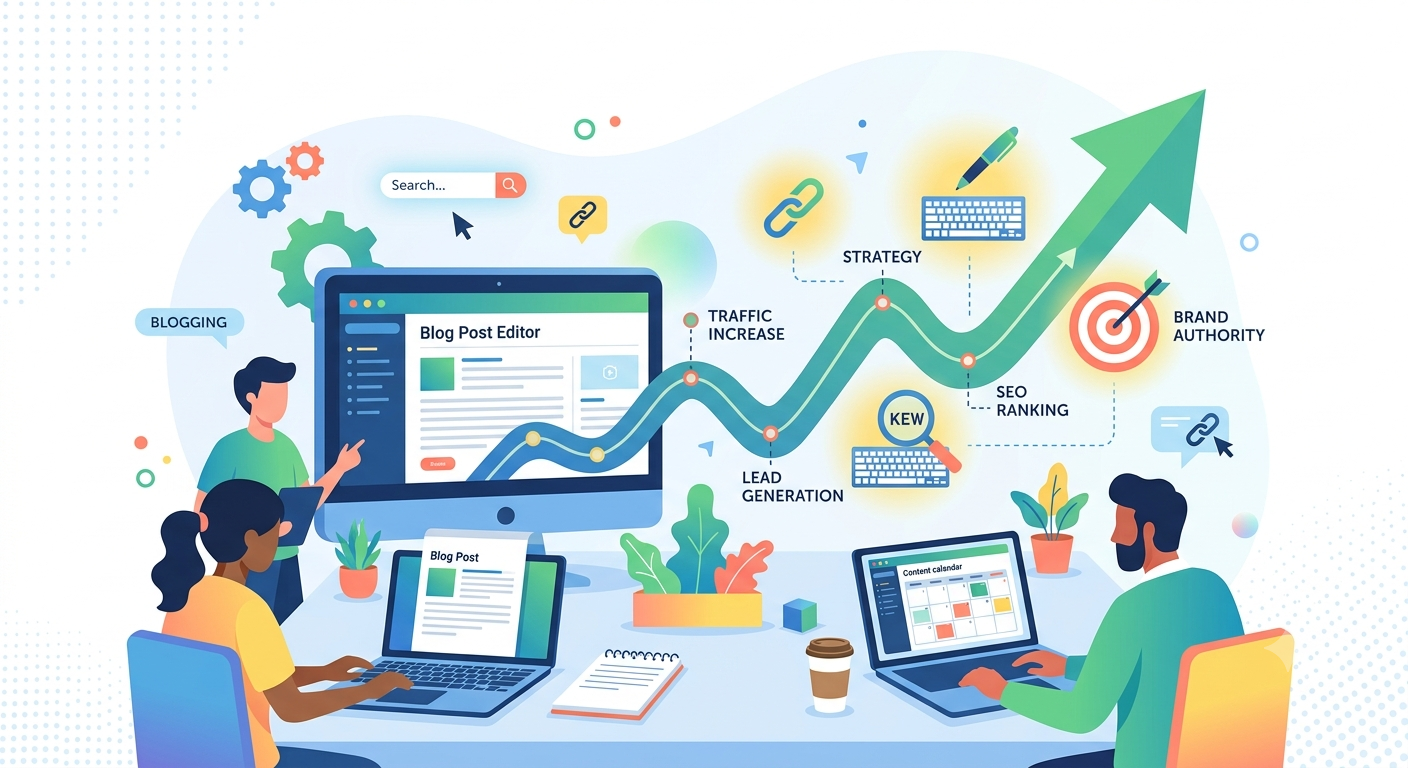
Why Blogging Is Important for SEO: 7 Powerful Benefits for Your Business Imagine this. You have built a beautiful website. Your logo looks professional. Your services are clearly explained. Your website works perfectly on mobile. Your contact form is ready. But there is one problem. Nobody is finding you. This is where the importance of blogging for SEO becomes clear. Your website tells people what your business does. A blog helps people discover your business when they are searching for answers, solutions, ideas, and information online. When done strategically, blogging can help your business target relevant search queries, increase organic traffic, build brand authority, strengthen internal linking, and generate qualified leads. But blogging is not simply about publishing an article every week. The real importance of blogging for SEO comes from creating useful content that answers real questions your audience is already searching for. The importance of blogging for SEO becomes even clearer when you look at how people search online today. Customers don’t always search directly for a product or service; they search for answers, solutions, comparisons, and advice. This is why understanding the importance of blogging for SEO can help businesses create content around the questions their audience is already asking. A well-planned blog can connect those searches with your website, services, and brand while creating more opportunities to appear in relevant search results. For businesses competing online, the importance of blogging for SEO is also closely connected to long-term visibility. Every useful article can target a specific topic, answer a customer question, support internal links, and guide readers toward relevant services. When businesses consistently publish genuinely helpful content, they can use the importance of blogging for SEO as part of a broader content marketing strategy focused on visibility, trust, organic traffic, and sustainable growth. Let’s explore how it works. How Does Blogging Help SEO? The importance of blogging for SEO starts with one simple idea: search engines need useful, relevant content to understand what your website is about. Your homepage and service pages may target your main business keywords. Your blog allows you to go deeper. For example, a digital marketing agency may have service pages targeting: SEO services Social media marketing Performance marketing Web design Digital marketing But potential customers may search for questions such as: How does SEO work? How can I increase website traffic? What is importance of blogging for SEO? How often should a business post on social media? How much does digital marketing cost? How can a small business get more customers online? These questions create opportunities for useful blog content. That is one of the biggest benefits of blogging for business. 1. Target Long-Tail Keywords One of the strongest reasons for the importance of blogging for SEO is the opportunity to target long-tail keywords. Not everyone searches using broad terms. Someone might search: “SEO” while another person might search: “how to improve SEO for a small business website.” The second search is much more specific. Blog posts are ideal for answering these specific questions because each article can focus on a particular topic, problem, or search intent. For example, instead of trying to rank one service page for every SEO-related search, a business could create useful articles about: How to improve local SEO How to optimize a Google Business Profile How to find SEO keywords How blogging improves website traffic Common technical SEO mistakes This is how blogging for SEO can expand the number of relevant topics your website can cover. The goal is not to create hundreds of pages just to target keywords. The goal is to create genuinely useful content for the people you want to reach. 2. Increase Organic Website Traffic Another major benefit of the importance of blogging for SEO is its potential to increase organic traffic. Think about your website as a shop. Your homepage is the front door. Your service pages are different departments. Your blog posts are additional doors through which people can enter your business. Every useful article can potentially attract visitors searching for information related to your industry. For example, a web design company could publish articles about: Website design Mobile-friendly websites Website speed Landing pages Conversion rate optimization WordPress User experience A digital marketing agency could publish content about: SEO Social media Content marketing Google Business Profile Performance marketing Online advertising This is how how blogs help SEO becomes practical. More useful content creates more opportunities for relevant people to discover your website through search. However, blogging does not guarantee rankings or traffic. Competition, content quality, search intent, technical SEO, website authority, and the usefulness of the page all matter. 3. Build Brand Authority and Trust Would you trust an agency that simply says: “We are SEO experts.” Or would you feel more confident about an agency that regularly explains SEO strategies, website optimization, keyword research, local SEO, and content marketing? This is another important part of the importance of blogging for SEO. A blog gives businesses an opportunity to demonstrate knowledge rather than simply claim expertise. When you consistently publish useful information, potential customers can see how you think, how well you understand their problems, and whether your advice is actually helpful. Over time, this can help build: Brand authority Familiarity Trust Expertise Customer confidence For a growing business, building brand authority through content can become a valuable part of its long-term marketing strategy. 4. Create Powerful Internal Linking Opportunities Internal linking is another reason the importance of blogging for SEO goes beyond simply getting traffic. Imagine you publish an article called: “How to Improve Local SEO for Your Business.” Within that article, you could naturally link to: Your Local SEO service Your Google Business Profile service Your main SEO page A related SEO blog Your contact page This creates a logical journey for visitors. A person reads the article. They find a relevant service. They learn more. Then they can contact your business. Internal links can also help search engines understand the relationship between different pages on your
What is AI SEO? : How AI Is Changing Search SEO ?
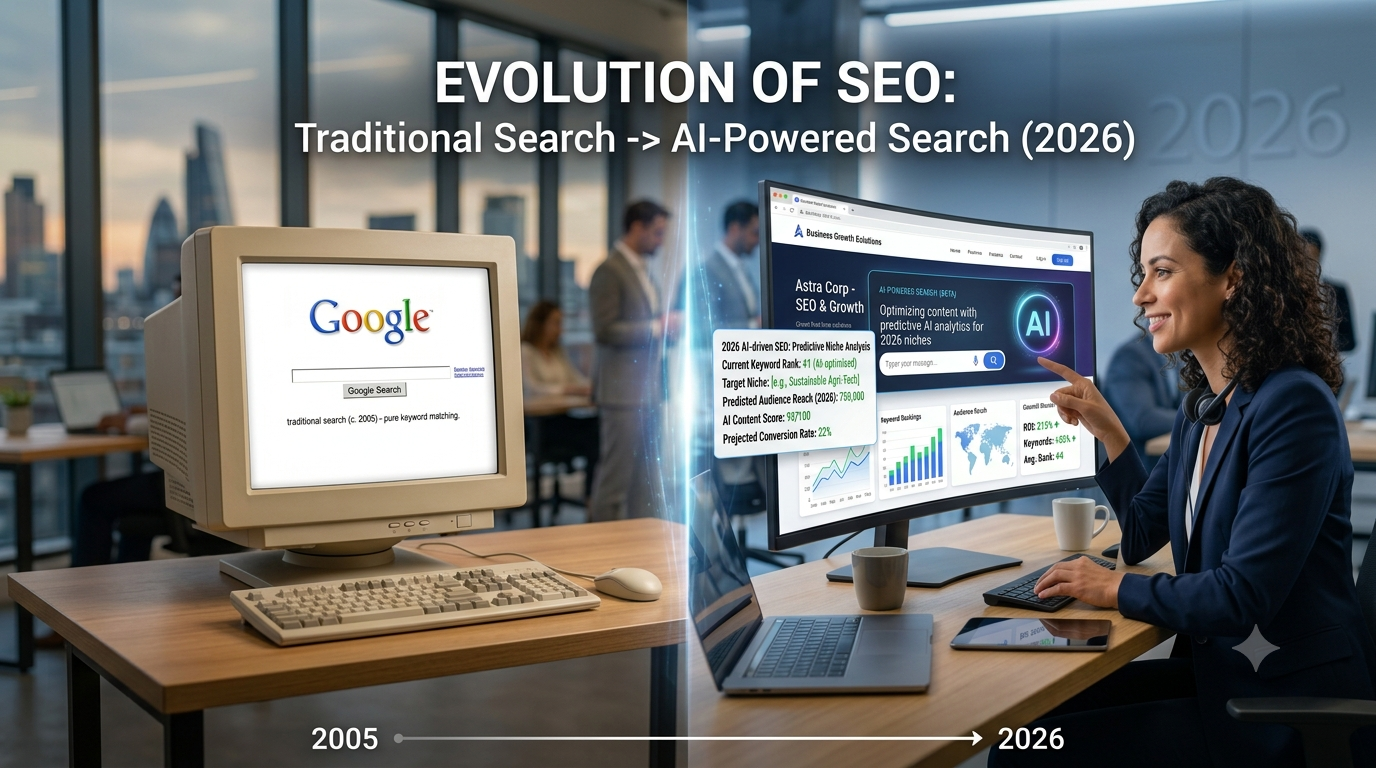
What is AI SEO? : How AI Is Changing Search SEO ?Imagine a potential customer searching for your service. A few years ago, they might type a keyword into Google, scan several blue links, open a few websites, and make a decision. In 2026, that journey can look very different. Search engines increasingly use AI to understand complicated questions, connect information from multiple searches, summarize answers, and help users explore topics. Google’s AI Overviews and AI Mode are examples of this shift. So, does this mean SEO is becoming irrelevant? No. AI is changing how search works, but the fundamentals of SEO still matter. Google says its generative AI search experiences are built on core Search systems, meaning crawlability, indexability, useful content, good page experience, and other SEO fundamentals remain important. The bigger change is that businesses now need to think beyond ranking for individual keywords. They need to become a useful and trustworthy source of information. What Is AI SEO ? AI SEO refers to using artificial intelligence to improve activities such as keyword research, content planning, search analysis, optimization, technical auditing, and understanding user intent. It also refers to the way AI is changing the search experience itself. AI can help search engines understand: What a user is really asking Related concepts and entities Context behind a query Information from multiple sources Different ways a user may express the same need For marketers, this means SEO is becoming less about inserting an exact keyword into a page and more about creating content that genuinely answers the user’s problem. How AI Is Changing Search SEO ? One of the biggest changes is the growth of AI-powered search experiences. Google’s AI Overviews can provide an AI-generated overview for certain queries, while AI Mode is designed for more complex exploration, comparisons, and follow-up questions. These experiences can use multiple related searches, sometimes referred to as query fan-out, to gather information from different areas before producing a response. This creates an important opportunity for websites. A business does not necessarily have to compete only for a single traditional search result. Its useful content can potentially become one of the sources supporting an AI-generated search experience. But there is an important distinction: There is no secret “AI SEO hack” that guarantees inclusion in AI search. Google’s current guidance says the same foundational SEO practices remain important for AI features. Pages must still be eligible for Google Search, and meeting requirements does not guarantee crawling, indexing, ranking, or inclusion in AI features. How AI Is Changing Search SEO ? AI is affecting SEO in two directions. 1. AI is changing how people search Users can ask longer, more conversational and complicated questions instead of entering short keywords. For example: Traditional search: best digital marketing agency Delhi More conversational search: What should a small business in Delhi look for when choosing a digital marketing agency? The second query contains more context and a specific decision-making need. Your content should therefore answer the underlying problem, not simply repeat the keyword. 2. AI is changing how marketers work SEO professionals can use AI to assist with tasks such as: Content briefs Search-intent analysis Topic clustering Keyword categorization Content outlines Metadata ideas Content gap analysis Technical SEO analysis Updating existing content Identifying questions customers frequently ask The important word is assist. AI can accelerate SEO workflows, but human judgment is still needed to verify facts, add original insights, understand the audience, and decide what is genuinely useful. What AI Can Do for SEO Used responsibly, AI can become a powerful productivity tool. Keyword and topic research AI can help organize large keyword lists into themes and identify related questions. For example, a business targeting local SEO might organize topics around: Google Business Profile Local rankings Reviews Local citations Google Maps Local content Near-me searches This gives the content team a broader understanding of the topic rather than focusing on one keyword. Content planning Instead of asking AI to write 50 generic articles, use it to develop a focused content plan. For example: Pillar topic:Local SEO for Small Businesses Supporting topics: How Google Business Profile works How to improve local visibility How customer reviews influence local trust Local SEO mistakes Local keyword research The result can be a more useful website structure. Content optimization AI can help identify missing subtopics, unclear sections, repetitive wording, and questions that a page hasn’t answered. But optimization should improve the reader’s experience—not simply increase keyword frequency. Technical SEO assistance AI can also help SEO teams interpret technical issues, generate explanations, analyze patterns, or assist with repetitive tasks. However, important technical changes should still be reviewed and tested by someone who understands the website. What AI Cannot Replace AI can generate text quickly. That doesn’t automatically make the content valuable. Google’s current guidance emphasizes unique, valuable, non-commodity content and encourages website owners to provide information that goes beyond what could easily be reproduced elsewhere. For example, an AI-generated article saying: “Here are 10 benefits of social media marketing.” may provide very little differentiation. But a digital agency could publish: “What we learned after managing social media campaigns for three different types of small businesses—and which strategies produced different outcomes.” The second approach has room for experience, examples, observations, and original insight. That’s where human expertise becomes an SEO advantage. How to Optimize Your Website for AI Search There is no separate formula that guarantees visibility in AI search. Instead, strengthen the fundamentals. 1. Create genuinely useful content Ask: Would a real customer find this page useful even if Google did not exist? If the answer is no, rethink the page. Avoid creating large numbers of nearly identical pages simply to target every possible search variation. Google specifically warns that generating large amounts of low-value content—including content produced using generative AI—can fall under its scaled content abuse policy. 2. Add original experience and expertise Don’t simply summarize what everyone else has already published. Add: Original examples Case studies Expert commentary First-hand observations Screenshots where